When Experience Meets Expectation - It’s Not Just About Age.
Experience is not just about age. It is what we’ve been taught to value.
I remember sitting in a meeting once, listening to a conversation that felt familiar.
Not because of the topic but because of the tension that was rising.
One person was pushing for speed. “Let’s just try it, we’ll figure it out as we go.”
The other encouraged a slower, measured approach. “Let’s think this through properly first.”
The subtle divide of “why are you like this?”energy (unspoken) being exchanged across the table.
I sat there thinking - this isn’t about the work. This is about how we’ve learned to work and what we’re taught to value at different stages in our lives.
Different Eras, Different Values
The way we approach work, problem-solve and collaborate is often shaped by the era we identify with. Each generation brings its own set of experiences, methods and values to the table, influencing how we respond to challenges and interact with others.
Alignment with a particular era, impacts not just our preferences but also our perception of what constitutes effective work and sometimes leads to misunderstandings within a team.
Recognising these differences can help us appreciate the diversity of perspectives and build more cohesive, adaptable teams.
There’s something interesting that happens when you’re leading or working across an intergenerational team because you're not just working with different people. You’re working with different eras of experience.
Question is…
Are we willing to lean into curiosity and listen?
Experience equals patterns. Patterns of behavior, thought, approach and in some cases appreciation (or not) of those we find ourselves working with. We all bring a toolkit of varying degrees, packed with unique skills and lifetimes of experience.
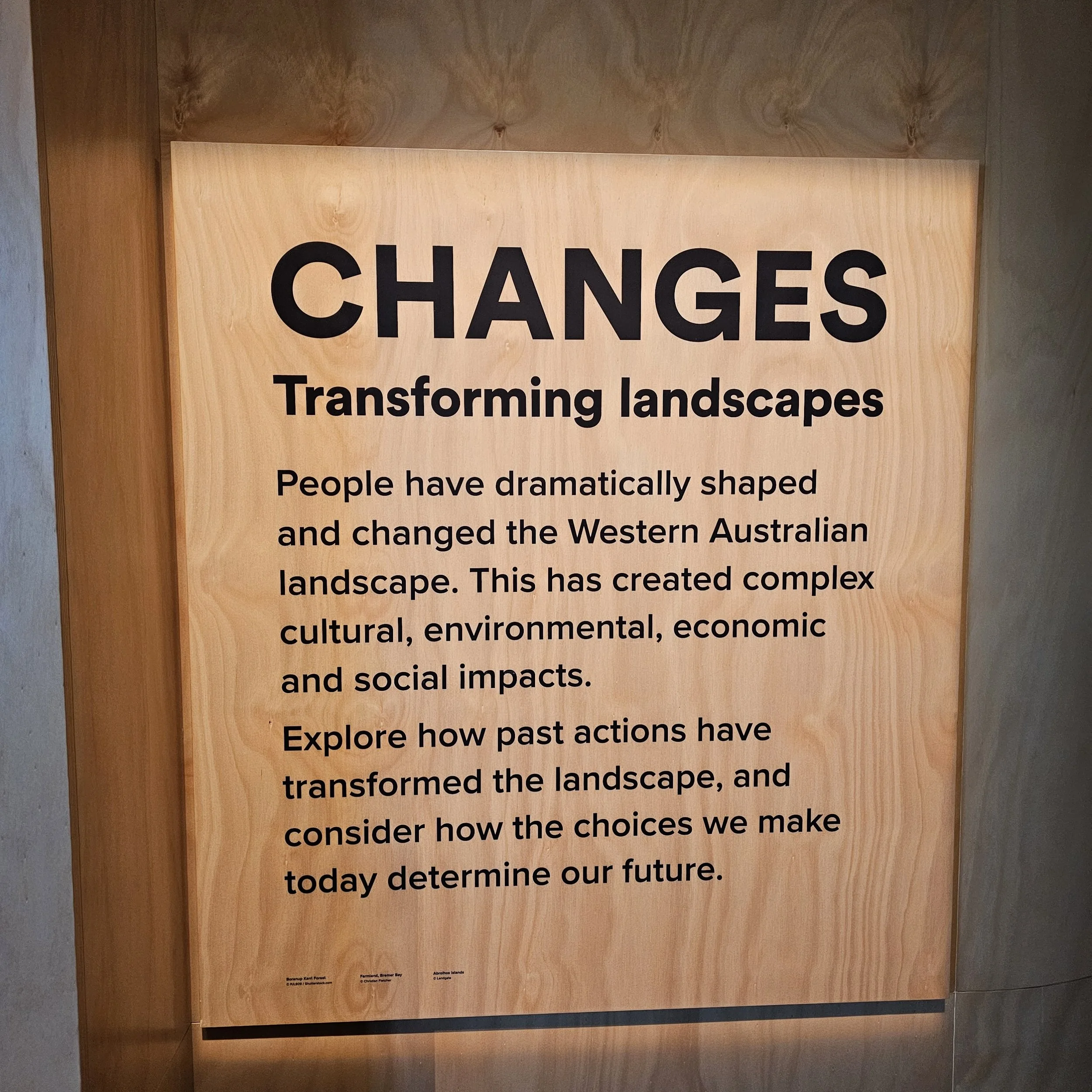
WA Museum Boola Bardip, Jan, 2026
Different tool-kits that are impossible to measure as a benchmark to success, as a one-size fits all approach doesn’t work.
Patterns as Proven Approaches
When we repeatedly rely on patterns that have worked several times, these approaches naturally evolve into what is perceived as the “winning formula”. This familiarity brings a sense of confidence to our work, shaping the way we tackle new challenges. The comfort derived from established methods can often lead teams to favour these tried-and-tested strategies, reinforcing the idea that success is best achieved by following what has worked previously.
Patterns rewarded over time, signal safety, stability and successful for us. So, when someone comes along with a “let’s disrupt everything by Friday” mindset. It doesn’t always land as exciting or if at all. Landing more like chaos followed by internal ‘eye rolls’ from the team.
On the flip side, if you're used to moving fast, testing quickly and learning on the go versus those preferring the slower more considered approach – it can feel like resistance.
When you're ready and waiting at the start line, you could be left thinking “why are we making this harder than it needs to be?”.
The challenge is with a mix of people in the same room, all capable, experienced and wanting the best outcome but are operating from completely different playbooks, different eras.
There’s research behind this. Psychologist Erik Erikson suggested that throughout life, we navigate different psychological tensions that shape how we think and behave.
In later career stages, one of those is around contribution and wanting to add value, share knowledge to feel and stay relevant.
So, when change shows up, people aren’t just reacting to the situation. They’re responding from what they’ve learned, what’s worked and where they see their place within the team environment.

Credit: Verywell/ Joshua Seong
It got you promoted, gained respect and trust, resulting in creating a sense of job security. Then this became your winning formula, your blueprint to success and experience is not just about age. It’s what we’ve been taught to value.
Can I still succeed if the rules change?
Intergenerational teams aren’t challenging because of age. They’re challenging because they’ve been trained in different versions of “what good looks like.”
We are capable, and different situations continue to show us just how capable we are and at the very least, offer a new learning.
So, if you’re leading a team or you’re part of one, here’s what I’d offer, as observations.
1. Experience is not resistance. It’s information.
What might look like hesitation is often someone scanning for risk. They’re not trying to slow things down. They’re drawing from past experiences to help inform the next steps.
2. Speed is not recklessness. It’s adaptation.
What might feel rushed is often someone responding to a world that moves faster than it used to. This is not being careless it’s responding as best they can with information at hand.
3. The goal isn’t to agree. It’s to understand.
Not everyone needs to move the same way, but we do need to understand why we move the way we do. It’s worth the conversation.
Instead of looking at it like...
“Why don’t they get it?”
To…
“What has worked so well for them that they trust it?”
Leading across an intergenerational workforce isn’t about managing differences. It’s about recognising that everyone is navigating change from a different starting point and an adaptable team knows when to evolve.
So, until next time, speak soon.
Zee
Move with Change | Move with Confidence