Trust Leadership. But Don’t Surrender Yourself.
Why the strongest professionals think as partners, not followers
There was a time in my career when I believed good leadership meant people didn’t need to question anything.
I trusted completely. I followed loyally. I believed they had my back.
And years earlier, when I was leading my own team, that’s exactly what they believed about me.
They trusted completely. They followed loyally. They believed I had their back.
At the time, I wore that trust like a badge of honour.
I was 21 when I first stepped into leadership within the Finance sector. I had energy, enthusiasm and confidence that could only come from not yet knowing what I didn’t know. I genuinely believed I had leadership worked out.
I thought since I was bestowed my very 'important' leadership title. It meant special privileges like glide time - set my own times, come and go as I please. So naturally, in my mind, that meant I could arrive at 9:30am (or later), while expecting my team to be there at 8:30am sharp.
I didn’t see the contradiction because in my head (ego), I was leading. The team were probably wondering why morale wasn’t quite matching the level of my self-confidence.
Then there was the email.
My very first team email. A proud leadership moment, entirely written in CAPITAL LETTERS.
I was excited. Motivated. Ready to energise the team. What I didn’t realise was that, in corporate language, I wasn’t inspiring them.
I was yelling. No one told me immediately. Until my leader pulled me aside.
She had taken the time to listen to the team (someone snitched! I mean provided feedback), to understand their experience before speaking to me privately. Not to embarrass but to develop me. Her feedback was honest, direct, yet encouraging. After all, she was the one who hired me. I felt a responsibility to show others and my boss that she'd made the right call. Her reputation was on the line as much as mine.
In this teachable moment she didn’t strip me of confidence, if anything she strengthened it, demonstrating that she still believed in me and its stayed with me ever since. That's why I think leadership is not perfection its partnership.
Years later, when I found myself on the other side as a team member, trusting leadership completely, only to experience decisions I hadn’t anticipated, it brought everything full circle. Not in a way that made me bitter but in a way that made me wiser. I realised how easy it is to emotionally attach yourself to your role. My advice? Don't do that, your role (job) is not your identity.
It's easy to assume leadership will always hold the full picture - that's impossible for anyone.
It's easy to stop checking in with yourself - we forget ourselves too quickly.
That experience taught me one of the most important lessons of my professional life. Trust in leadership is important, but self-trust is above all else.
Blind faith removes personal responsibility. Partnership strengthens it.
Blind faith is passive. It asks us to trust without thinking, questioning, or participating. Often handing over responsibility for our future to someone else.
Partnership requires presence and ownership. It asks us to engage, contribute and take shared responsibility. In times of change, blind faith keeps us waiting and partnership moves us forward, together.
The strongest professionals don’t switch off their thinking when they enter the workplace. They stay curious, ask questions, reflect and contribute ideas. Not because they don’t respect leadership but because they respect themselves too and only the best leaders will recognise this, for what it is.
I choose to believe good leaders, don’t want silent compliance, they want thinking partners. As leadership were never meant to carry the full responsibility alone. It exists in relationship with their team. This is what adaptability looks like in practice, maintaining ownership of yourself.
Your role is what you do, not who you are. Stay informed and understand your environment so you can back yourself. When your identity is tied too tightly to a role or leader, any change can feel personal.
When we stay connected to ourselves, we move with agency and become stronger professionals.
Looking back now, I don’t regret trusting leadership. I don’t regret being the enthusiastic 21-year-old who thought capital letters built motivation and glide time only applied in one direction, mine!
Both versions of me were learning, growing and evolving.
The observations I’d like to offer from my week:
Trust leadership. But don’t disconnect from your own thinking in the process.
Your role is part of your life, not your entire identity.
The strongest professionals don’t just follow leadership. They partner up.
Power in Change is about recognising that adaptability isn’t just about responding to change - it’s about staying grounded in who you are while you navigate it.
My advice.
Don't place blind faith in leadership. Partner with it. Because, "hoping for the best" was never a solid career strategy and yes, easier said than done but confidence, once surrendered too freely, is far harder to reclaim that it is to protect.
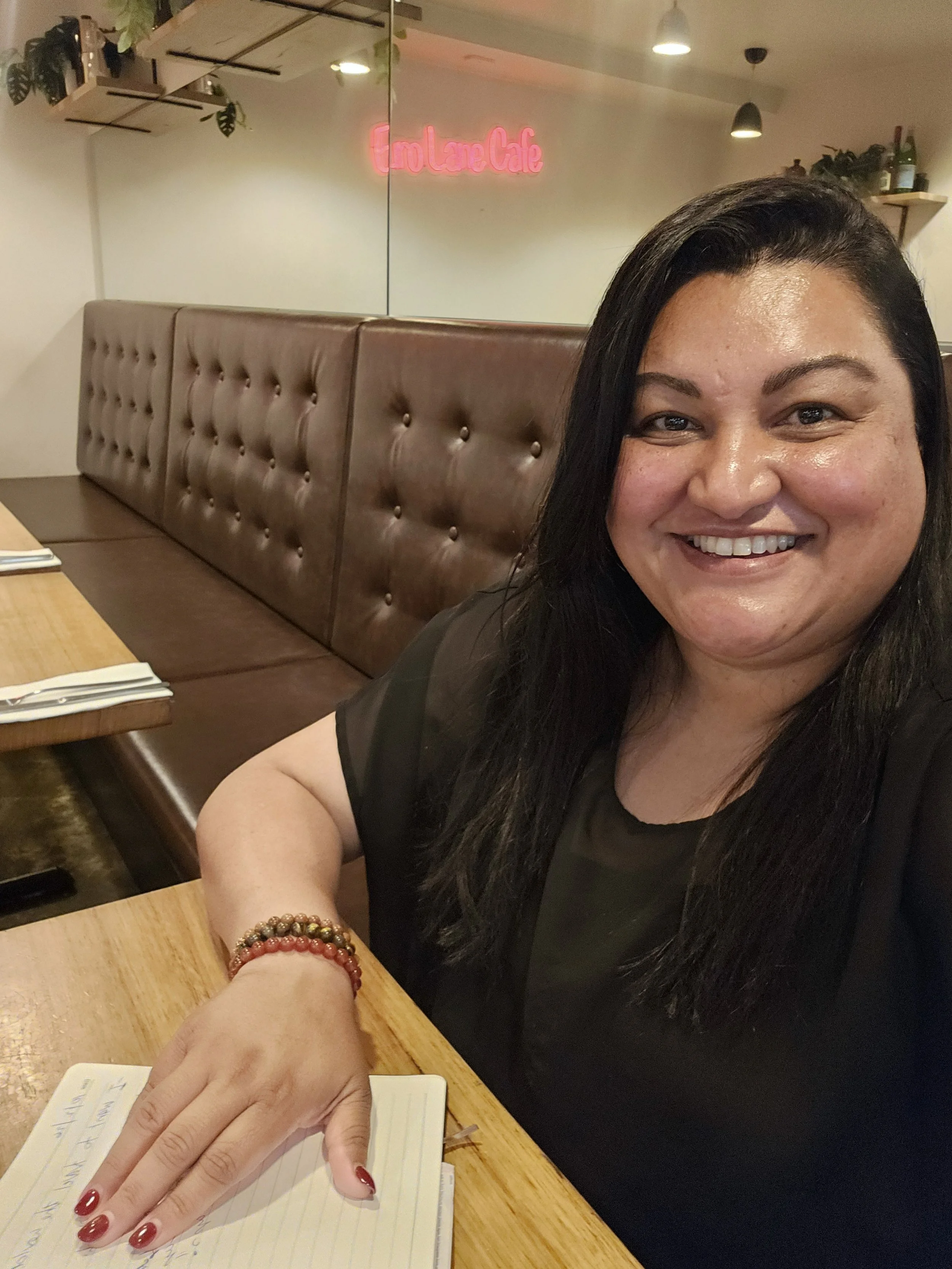
Coffee & journal at Euro Cafe, Central Place, Melbourne.
Until next time.
Speak soon.
Zee
Move with Change | Move with Confidence